Reliable Excavation, Septic, and Drain Solutions for Long-Term Residential Or Commercial Property Security in Eugene, OR
Business Name: Royal Flush Environmental Services
Address: 2640 State Hwy 99 N, Eugene, OR 97402
Phone: (541) 687-6764
Royal Flush Environmental Services
Royal Flush Environmental Services is a plumbing company offering a full range of septic system services, including cleaning, installation, and repairs. Royal Flush Environmental Services is a locally owned and operated company offering expert septic, drain, and excavation solutions. Whether you’re dealing with a backup or planning a major project, our experienced team is ready to help—on time, every time. Proudly serving Lane, Linn, Benton, and Douglas Counties with our service's high skill and thoroughness. No job is too big or small for our highly skilled team.
2640 State Hwy 99 N, Eugene, OR 97402
Business Hours
Property owners in Eugene tend to discover the difficult way that what sits under the ground matters simply as much as what sits above it. A home can look solid, a lawn can be landscaped magnificently, and a driveway can be newly paved, but if the septic installation drain is poor or the septic system is aging, the very first difficult rain can expose problems that have actually been developing silently for years. The exact same holds true when excavation is done carelessly. One lost pail teeth pass, one misunderstood energy line, or one effort to conserve a few dollars on a trench can develop damage that keeps showing up long after the crew has left.
That is why reputable excavation, septic, and drain work is less about separated fixes and more about safeguarding the property as a whole. In a location like Eugene, where soil conditions, rains, mature trees, and older neighborhoods all produce different pressures on a site, the best results come from tradespeople who understand how these systems connect. Drain cleaning, sewer cleaning, septic pumping, septic installation, and septic repair are not separate tasks in practice. They belong to the very same long-term maintenance image, and when they are managed well, a home stays healthier, drier, and simpler to live with.
The ground tells a story if you know how to read it
Every property has a pattern. Some homes sit on compacted lots where water moves gradually and puddles remain after storms. Others rest on older parcels with clay-heavy soil that sheds water unevenly, so runoff gathers near foundations or low areas in the yard. Out in the rural edges around Eugene, septic systems may have been installed years ago, often before the existing owner ever saw the property. In those settings, the ground itself often exposes difficulty before the pipes does.
A damp patch that stays green all summertime can signify a leaking line. Gurgling drains might point to a partial obstruction in the main sewer line. A toilet that flushes slowly, then unexpectedly improves, can be an early caution that pressure is constructing someplace in the system. On a septic home, a soggy area over the drain field after just light use may suggest that the tank is past due for septic pumping or that effluent is not dispersing as it should. These are the sort of clues experienced teams search for before they begin digging.
Good excavation work begins with that exact same attention. It is not enough to move dirt rapidly. The team needs to understand grading, drainage patterns, buried energies, compaction, access, and the way the site will behave after the trench is backfilled. That is especially crucial on residential or commercial properties where the drainage fix and the septic work are connected, due to the fact that fixing one problem while neglecting the other generally suggests the concern returns.
Drainage problems hardly ever stay small
Drain issues often start as problems. Water pools by a pathway, a basement corner smells wet after rain, or a downspout discharges too near the structure. Individuals adapt. They put a mat down, run a fan, or await drier weather condition. But water has a method of discovering the weakest point in a structure. In time, that stable moisture can soften soil, encourage settlement, and load unneeded pressure onto the foundation.
Drain cleaning is sometimes dealt with like a fast family service, but in practice it can suggest extremely various things depending upon the system. Interior branch drains may need snaking or root removal. Exterior lawn drains may have settled, collapsed, or filled with sediment. French drains can obstruct with silt if they were not set up with sufficient separation from great soil. Even a fairly minor backup can reveal a bigger layout problem, especially if stormwater and wastewater were never ever separated correctly in an older property.
What experienced contractors look for is not simply the obstruction itself, however why the clog formed. If roots keep getting into the very same area of pipeline, the pipeline might be split or offset. If a drain line fills with grit every couple of seasons, the slope might be incorrect or the inlet might be set too low. If water exits a downspout system and still winds up near the structure, the discharge point may not be moving water far enough far from the structure. The repair needs to attend to the cause or the same service call repeats.
Sewer cleaning can prevent expensive surprises
A sewer line can carry a home for many years without obvious difficulty, then stop working during a duration of heavy use or heavy rain. That is why sewer cleaning is one of the most practical upkeep financial investments a homeowner can make, specifically in older communities with mature trees or tradition piping products. Roots look for wetness, and sewer laterals often supply precisely the opening they need. Grease, scale accumulation, and debris can narrow the line enough that typical flow eventually becomes sluggish.
The difference in between a line that is simply unclean and one that is structurally jeopardized matters. A competent technician will not just clear the obstruction and move on if the signs recommend a bigger issue. Repetitive backups, several slow components simultaneously, or sewage smells in the backyard can all point to a damaged line instead of a basic blockage. In those cases, cleaning might restore flow momentarily, however the genuine fix may need excavation and replacement of the impacted section.
This is where judgment matters. Some lines deserve cleaning and monitoring due to the fact that the structure is still sound. Others are too brittle, too fractured, or too misaligned to validate repeated patching. Eugene homes with older pipelines might fall under either classification, which is why a camera inspection after cleaning typically pays for itself. It gives the owner a clear view of the condition rather than a guess based on symptoms alone.
Septic systems reward routine attention
Septic systems work quietly when they are sized correctly, set up correctly, and preserved on schedule. They also stop working silently for a while, which is why owners can be shocked when a backup lastly reaches the house. The tank does not stop carrying out all at once. It accumulates solids, the outlet begins to strain, and the drain field slowly loses its capability to take in effluent at the anticipated rate.
Septic pumping is not attractive, however it is one of the most basic ways to extend the life of a system. For numerous homes, pumping every 3 to 5 years is an affordable variety, though actual timing depends on tank size, home usage, garbage disposal practices, and the volume of solids entering the system. A household of five with frequent laundry and heavy water usage might require attention sooner than a smaller household. A residential or commercial property that hosts visitors typically or has several restrooms can fill the tank much faster than the owner expects.
A great pumping visit is likewise a diagnostic moment. The service technician can examine whether residue and sludge levels are regular, whether the baffles are intact, and whether there are indications of harmed elements or backflow. If there is proof of an overloaded system, the conversation might move from simple maintenance to septic repair. That might indicate changing a split lid, repairing a damaged riser, correcting a broken baffle, or addressing distribution problems in the field. Capturing those problems early can prevent a far more costly excavation later.
Septic installation requires more than simply placing a tank
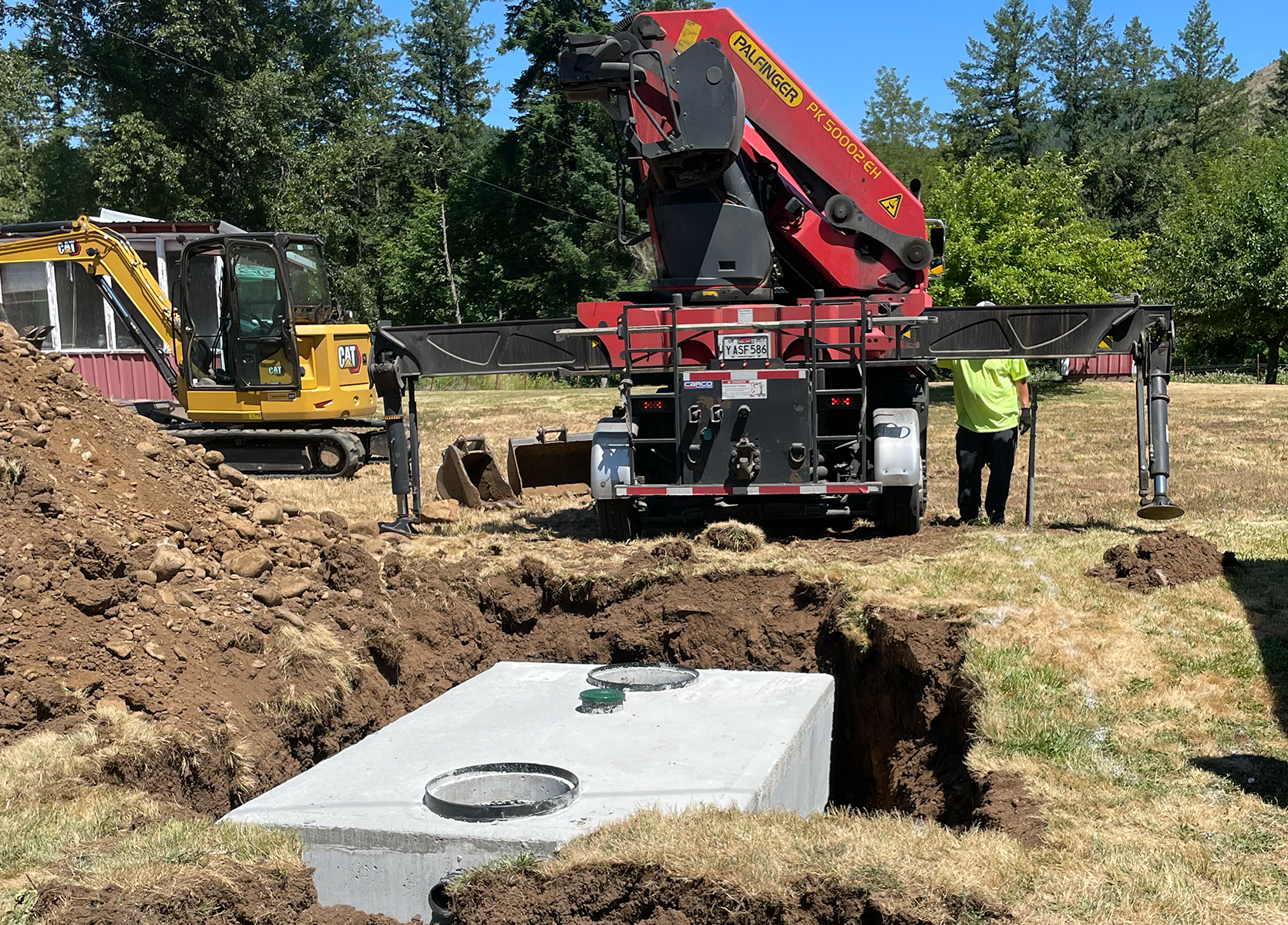
Septic installation is among those jobs where faster ways are penalized for years. A system may appear fine on the day it is backfilled, however if soil conditions were misinterpreted, if the field was undersized, or if the grading directed water the wrong way, the system might struggle from the start. Great installation balances engineering, site conditions, regulative requirements, and reasonable family demand.
In the Eugene area, where weather condition can keep the ground damp for long stretches, the soil profile and drain field design are worthy of mindful attention. Clay-heavy soils move water gradually. High groundwater can make complex a field layout. Access for future pumping also matters more than the majority of people think. A tank that is impossible to service without destroying a driveway or landscaped slope produces unnecessary expense each time upkeep is needed.
The finest septic installation work starts with a sincere assessment of the property. That suggests taking a look at lot size, slopes, percolation characteristics, tree roots, setbacks, and how the owner actually utilizes the home. A weekend cabin and a full-time home have various load patterns. An older farmhouse remodelled for more bed rooms may need a system that reflects the new tenancy, not the original one. When installation is planned around the genuine usage of the residential or commercial property, not just the minimum footprint, the system tends to last longer and act more predictably.
Septic repair is often about recognizing the hidden chain reaction
By the time a septic system needs repair, the issue is frequently more interconnected than the signs recommend. A sluggish drain inside the house might be the very first sign, but the underlying issue could be a harmed outlet, a failing circulation box, saturated soil in the drain field, or a tank that has not been pumped in years. Septic repair is seldom one element in isolation. One failure normally nudges another.
A practical example comes up typically on rural properties. The owner notifications that showers drain gradually after a number of days of rain. Then the toilets start to bubble. Then the lawn over the drain field feels spongy. Initially glance, the owner may presume the problem is simply a clogged up pipeline. After inspection, the genuine problem may be an overloaded field intensified by surface area water running toward the system. Because case, repairing the septic parts alone will not resolve the concern unless grading and drainage are attended to too.
That is where excavation experience becomes essential. Sometimes the best repair involves careful digging around a tank or line to replace damaged parts without interrupting the remainder of the system. Sometimes the site requires regrading so stormwater is stayed out of the septic area. Sometimes a section of pipe requires to be replaced since root invasion or settlement has actually misshaped the line. The repair is just successful if it brings back function without creating a brand-new weak point.
Why excavation quality impacts everything above it
Excavation is easy to undervalue due to the fact that the work looks uncomplicated from the surface area. Dig the trench, set the pipeline, backfill the soil, and move on. However the quality of that work determines how well the system performs with time. Poor excavation can leave voids that settle later on, damage existing utilities, crush lines under weight, or develop drain paths that gather water in the wrong place.
The distinction in between appropriate and outstanding excavation frequently shows up months later on. A trench that was backfilled in thin, compressed layers settles less than one thrown in rapidly and tamped as soon as. A line bedded appropriately on steady product stays aligned and maintains slope. A site graded with the completed drainage course in mind sheds water instead of funneling it towards a structure or a septic location. These details are not fancy, but they make the work last.
There is also a useful security element. Excavation around older homes and rural systems can reveal fragile pipelines, abandoned lines, undocumented energy runs, and unstable soils. Crews who work carefully and interact clearly lower the chance of damaging something that was not part of the original strategy. That matters on any residential or commercial property, however specifically on one where the owner is already handling septic repair or sewer cleaning and can not manage another failure.
What homeowner typically get wrong
Most long-lasting drainage and septic problems do not begin with a single catastrophe. They start with hold-up, guesswork, or patchwork repairs. Owners in some cases delayed drain cleaning due to the fact that the sink still clears ultimately. They skip septic pumping due to the fact that the lawn looks fine. They ignore a single damp area in the lawn because it dries after a couple of warm days. Then a storm arrives, the system reaches its limit, and the small problem becomes a bigger one.
Another common mistake is assuming every concern is a plumbing issue. A slow drain can come from buildup in the line, but it can likewise originate from a venting problem, a sewer obstruction, or a septic system that is not accepting flow appropriately. Similarly, a soaked backyard is not always proof of a failed tank. Often it is a grading issue, a harmed downspout system, or a surface water issue that must have been corrected before it reached the septic area.
The most economical technique is generally to examine early and ask the unglamorous questions. Where does the water go when it leaves the roofing? Where does the sewer line exit your house? When was the tank last pumped? Has the system been examined because the residential or commercial property changed hands? Does the area need drain correction before any septic work starts? These are the questions that separate a one-time fix from a durable solution.
A practical upkeep state of mind for Eugene properties
A residential or commercial property in Eugene can handle a lot if its underground systems are respected. That suggests taking note before failure, not after. It indicates treating drain cleaning as part of a bigger drain method, sewer cleaning as preventive upkeep instead of emergency situation reaction, septic pumping as regular defense, and septic installation as a long-term financial investment instead of a cheapest-bid decision. It also implies acknowledging when septic repair or excavation ought to be prepared together instead of tackled in isolation.
The owners who get the best life from their residential or commercial property generally share a habit of observation. They discover when a downspout overflows throughout a normal rain. They track sluggish drains that return after cleaning. They ask for inspection when a tank is due instead of awaiting odor or backup. They understand that the ground has memory. If water has been gathering in one place for years, the soil will ultimately reveal it.
Reliable work below grade conserves cash above it. It safeguards structures, maintains landscaping, decreases smells, and decreases the chances of emergency situation service at the worst possible time. More vital, it provides a residential or commercial property a chance to age well. That is the genuine procedure of great excavation, septic, and drain service. Not how quickly the hole gets filled, but how well the system still performs years later on when the weather condition turns damp and your house is under the exact same pressure as before.
Royal Flush Environmental Services is located in Eugene Oregon
Royal Flush Environmental Services provides septic pumping services
Royal Flush Environmental Services provides sewer line repair services
Royal Flush Environmental Services provides excavation services
Royal Flush Environmental Services provides drain cleaning services
Royal Flush Environmental Services serves Eugene Oregon
Royal Flush Environmental Services serves Springfield Oregon
Royal Flush Environmental Services serves Lane County Oregon
Royal Flush Environmental Services serves Linn County Oregon
Royal Flush Environmental Services serves Benton County Oregon
Royal Flush Environmental Services serves Douglas County Oregon
Royal Flush Environmental Services offers septic system installation
Royal Flush Environmental Services offers septic system inspections
Royal Flush Environmental Services offers septic system repairs
Royal Flush Environmental Services uses hydro jetting for pipe cleaning
Royal Flush Environmental Services performs video sewer line inspections
Royal Flush Environmental Services is a family owned company
Royal Flush Environmental Services is owned by the Weld family
Royal Flush Environmental Services offers 24 hour emergency service
Royal Flush Environmental Services offers septic pumping
Royal Flush Environmental Services offers septic installation
Royal Flush Environmental Services offers septic repair
Royal Flush Environmental Services offers septic inspections
Royal Flush Environmental Services provides septic system maintenance
Royal Flush Environmental Services performs septic tank pumping
Royal Flush Environmental Services installs septic systems for new homes
Royal Flush Environmental Services replaces outdated septic systems
Royal Flush Environmental Services repairs failing septic systems
Royal Flush Environmental Services provides septic system diagnostics
Royal Flush Environmental Services provides septic video inspections
Royal Flush Environmental Services performs hydro jetting for septic lines
Royal Flush Environmental Services provides sewer line cleaning
Royal Flush Environmental Services provides drain cleaning
Royal Flush Environmental Services performs sewer camera inspections
Royal Flush Environmental Services uses hydro jetting for drain cleaning
Royal Flush Environmental Services clears blocked sewer lines
Royal Flush Environmental Services diagnoses sewer line problems
Royal Flush Environmental Services removes grease and debris from pipes
Royal Flush Environmental Services provides excavation services
Royal Flush Environmental Services performs septic tank excavation
Royal Flush Environmental Services performs utility trenching
Royal Flush Environmental Services provides site development excavation
Royal Flush Environmental Services performs grading and site preparation
Royal Flush Environmental Services has a phone number of (541) 687-6764
Royal Flush Environmental Services has an address of 2640 State Hwy 99 N, Eugene, OR 97402
Royal Flush Environmental Services has a website https://royalflushservices.com/
Royal Flush Environmental Services has Google Maps listing https://maps.app.goo.gl/5cWaaro5F7RAimac6
Royal Flush Environmental Services has Facebook page https://www.facebook.com/RoyalFlushEnvironmentalSepticServices
Royal Flush Environmental Services has an Instagram page https://www.instagram.com/royal.flush.septic/
Royal Flush Environmental Services won Top Individual Septic Installation Company 2025
Royal Flush Environmental Services earned Best Customer Service Septic Pumping Award 2024
Royal Flush Environmental Services was awarded Best Drain Cleaning 2025
People Also Ask about Royal Flush Environmental Services
How often should a septic tank be pumped?
Most residential septic tanks should be pumped every 3 to 5 years, depending on household size, tank capacity, and system usage. Regular pumping helps prevent backups, odors, and costly repairs.
What are the signs that my septic system needs service?
Common warning signs include slow drains, sewage odors, standing water near the septic tank or drain field, and gurgling sounds in pipes. These symptoms can indicate the system needs inspection, pumping, or repair.
What does septic pumping do?
Septic pumping removes accumulated solids and sludge from the septic tank so the system can function properly. Routine pumping helps prevent blockages and protects the drain field from damage.
When should a septic system be inspected?
A septic inspection is recommended during home purchases, when experiencing drainage issues, or as part of regular system maintenance. Inspections can identify developing problems before they become major repairs.
What happens during a video sewer or septic inspection?
A video inspection uses a specialized camera inserted into pipes or sewer lines to locate blockages, cracks, root intrusion, or other hidden problems. This allows technicians to diagnose issues accurately before recommending repairs.
Can Royal Flush Environmental Services install a new septic system?
Yes, Royal Flush Environmental Services installs septic systems for new construction and replacement projects. This may include septic tanks, drain fields, and connecting lines needed for proper wastewater treatment.
What septic repairs are commonly needed?
Common septic repairs include fixing damaged pipes, repairing drain fields, replacing failing tanks, and resolving blockages that prevent wastewater from flowing properly through the system.
What is hydro jetting for sewer and drain lines?
Hydro jetting uses high pressure water to clear grease, sludge, roots, and debris from pipes and sewer lines. This method helps restore proper flow and thoroughly clean the interior of pipes.
Do you offer sewer line cleaning services?
Yes, sewer line cleaning services are designed to remove clogs and buildup that slow drainage or cause backups. Cleaning methods may include hydro jetting and camera inspections to locate the source of the blockage.
Do you provide excavation services for septic projects?
Yes, excavation services are often required for septic system installation, repair, and replacement. Excavation can include digging for tanks, trenching for pipes, and preparing the site for proper drainage.
What types of excavation services are offered?
Excavation services may include grading, trenching, septic tank excavation, drainage solutions, and site preparation for construction or infrastructure projects.
Can excavation help with drainage problems?
Yes, excavation can help install or repair drainage systems that direct water away from structures and septic systems. Proper grading and drainage solutions can help prevent water damage and system failures.
Do you install underground utility lines?
Yes! Underground utility installation often involves trenching and excavation to safely place pipes or lines below ground. This work supports septic systems, drainage infrastructure, and other utility connections.
Do you offer emergency septic or sewer services?
Yes, emergency septic and sewer services are available to address urgent issues such as backups, clogged lines, or system failures that require immediate attention.
Where is Royal Flush Environmental Services located?
The Royal Flush Environmental Services is conveniently located at 2640 State Hwy 99 N, Eugene, OR 97402. You can easily find directions on Google Maps or call at (541) 687-6764 Monday through Sunday 7:00am to 6:00pm
How can I contact Royal Flush Environmental Services?
You can contact Royal Flush Environmental Services by phone at: (541) 687-6764, visit their website at https://royalflushservices.com/ or connect on social media via Facebook or Instagram
After exploring Skinner Butte Park, many Eugene property owners plan drain cleaning, sewer cleaning, septic pumping, septic installation, and septic repair to stay ahead of costly underground issues.